Autonomous Robotic Systems & Intelligent Mobility Solutions
Advanced autonomous robotic platforms for inspection, patrol, monitoring, mapping, research and industrial automation — engineered for complex indoor and outdoor environments and integrated into your operations stack.
Intelligent robotic systems for the rounds humans shouldn't have to make
We design and deploy autonomous robotic systems that move, perceive and act in environments humans find slow, costly or unsafe. Each platform combines autonomous navigation, multi-sensor perception, remote operation and adaptive mobility — engineered for industrial, commercial, research and public-safety operations.
- Autonomous navigation across indoor, outdoor and underground sites
- Dynamic terrain adaptation — stairs, slopes, debris and confined spaces
- Real-time perception fusing vision, LiDAR, thermal and acoustic sensing
- Remote operation with low-latency video and bidirectional control
- Inspection automation with site-aware mission planning and reporting
- Intelligent mobility control with policy-driven exception handling
Platforms engineered for the rounds humans shouldn't have to make
Every device in this category is specified, integrated and supported by the same engineering team — not a marketplace of loosely-coupled vendors.
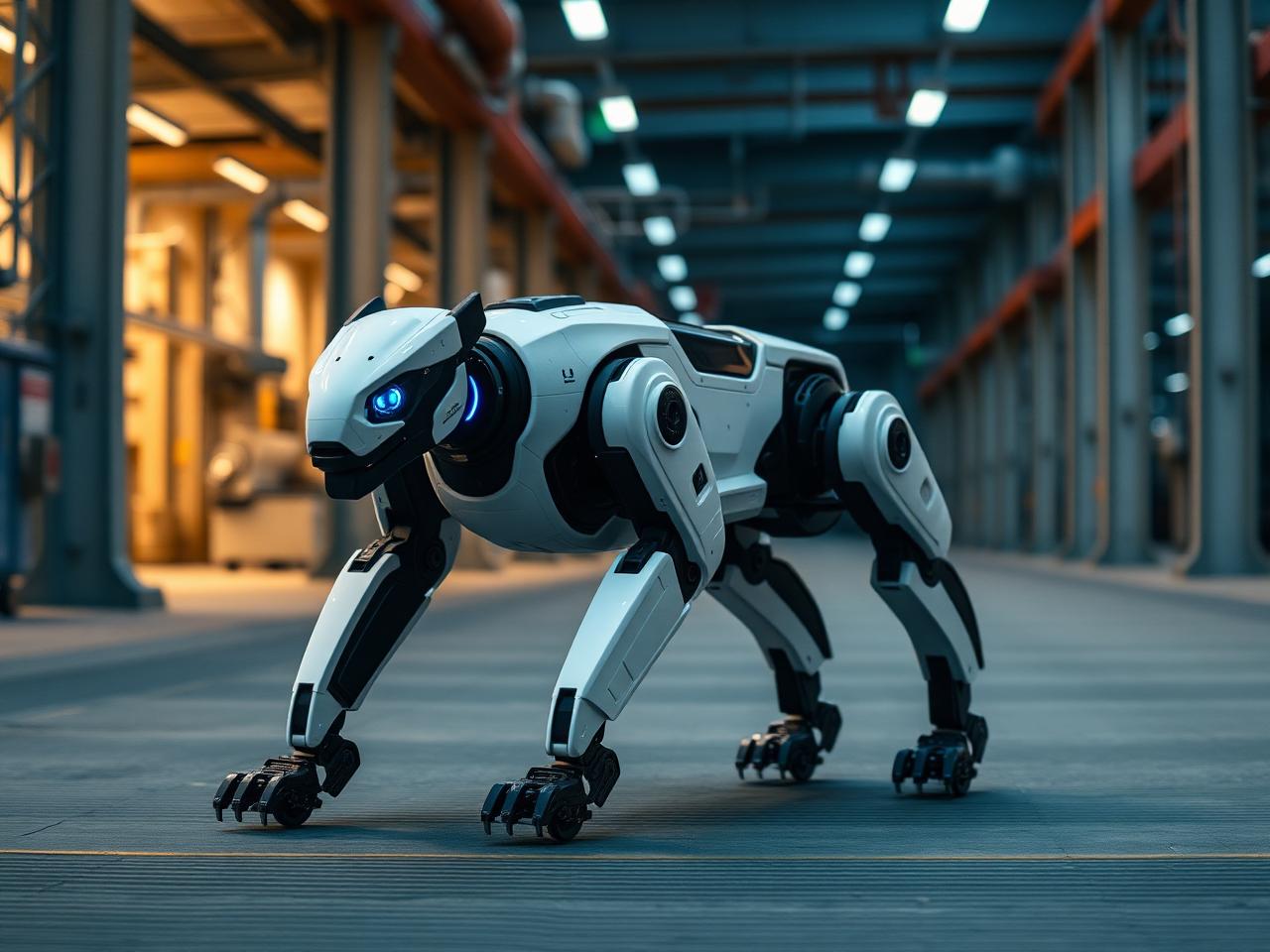
Four-legged platforms with rough-terrain mobility, stair traversal and modular payload bays for sensors and tools.
Bipedal platforms for tasks requiring human-scale presence, manipulation and complex environment traversal.
Wheeled and tracked AMRs running thermal, acoustic and visual inspection routes across plant environments.
Configurable platforms with open SDKs for university, research-lab and engineering-team programmes.
General-purpose mobile bases supporting custom payloads, navigation stacks and operator workflows.
Fleet orchestration, mission scripting and operator tooling that turn individual robots into a coordinated service.
Built for the workloads your operators actually run
Scheduled and event-driven patrols with VMS-grade video, evidentiary recording and operator escalation.
Stable locomotion across slopes, gravel, grass, debris and wet floors with real-time gait adaptation.
Bipedal and quadruped platforms negotiate stairs, kerbs and confined spaces that wheeled units cannot.
Low-latency HD video from onboard cameras to operator consoles and command platforms.
Tele-operation, payload control and exception handling from any approved console — locally or across sites.
LiDAR + visual SLAM produces georeferenced point clouds and 3D models from each mission.
AI mission planner balances coverage, energy, dwell time and operator-defined priorities.
Continuous patrol and inspection cycles with autonomous docking, charging and self-recovery.
Every robot — and its sensor feed — appears as a first-class entity inside Gilead Command alongside cameras, access events and ground sensors.
Deployed and operated, not just specified
Autonomous thermal and visual rounds — recorded, tagged and trended for asset-management workflows.
Quadruped patrols with PTZ and thermal payload replace fixed-route security walks around the clock.
Refinery, chemical, mining and confined-space inspections without crewed entry.
Inventory inspection, dock monitoring and goods-to-person workflows integrated with WMS.
Configurable platforms supporting robotics curricula, perception research and field experimentation.
Rapid-deploy quadruped and tracked units for fire, hazmat and disaster-response reconnaissance.
Wherever the consequence of a miss is too high
Why operators choose this stack
Quadruped and humanoid platforms negotiate stairs, slopes, debris and confined spaces wheeled units cannot reach.
Site-aware missions run unattended with autonomous docking, charging and policy-driven exception handling.
Self-contained platforms deploy in hours and adapt to new sites with minimal civil works.
Hazardous, confined and after-hours rounds run on robots, keeping crews out of the dangerous parts of the job.
Operator consoles fuse robot video, telemetry and AI-tagged events into a live operational picture.
Open mounting and APIs allow thermal, gas, LiDAR, manipulation and custom payloads on the same platform.
Fleet orchestration coordinates mixed humanoid, quadruped and wheeled units across one site or many.
Engineered for industrial duty cycles with weather-sealed enclosures, redundant power and remote health monitoring.
Speaks the protocols your stack already speaks
Open standards by default, with vendor-specific adapters where they shorten the path to value. We don't hold your stack hostage.
- ROS 2 / DDSSupported
- ONVIF Profile T (slew-to-cue)Supported
- CMMS: SAP PM, Maximo, RESTSupported
- GIS: Esri ArcGIS, GeoJSONSupported
- MQTT / Kafka event busSupported
- REST · WebRTC · WebSocketSupported
Lifecycle services — from first survey to operational handover
Use-case scoping, ROI modelling and concept-of-operations workshops with engineers who run these platforms in production.
Walk-throughs, RF and terrain survey, mission mapping and integration planning for each environment.
Platform selection, payload integration and connection into existing VMS, SOC, SCADA and CMMS workflows.
Role-based training for tele-operators, mission planners and supervisors — from basic operations to exception handling.
Preventive maintenance, OTA updates, remote health monitoring and field response under defined service-level commitments.
Bespoke payload integration, behaviour development and end-to-end programme delivery for novel use cases.
Managed services for fleets you want operated, not just delivered — including 24/7 monitoring options.
Deployments in the field
Bring the engineer who's deployed this before
Share your site, your constraints and your timeline. We'll match you with the engineer responsible for the deployment closest to yours and reply within one business day.